15 Aug 2026
Layered Prediction Methods: Performance Cycles in Equine Events, Court Sports, and Team Athletics
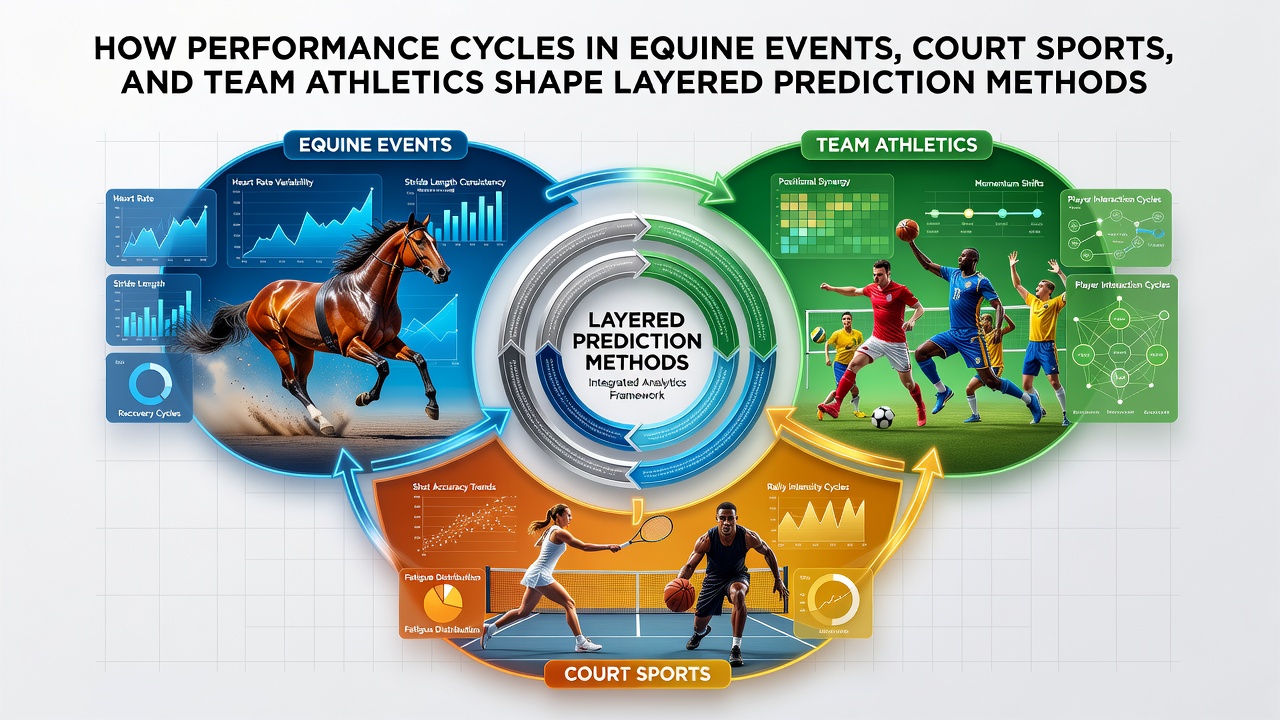
Performance cycles appear across equine competitions, court sports, and team athletics, and researchers have documented how these repeating patterns feed into multi-layered prediction frameworks used by analysts and forecasters. Studies from institutions such as the University of Sydney's Exercise and Sports Science department indicate that horses exhibit recovery and peak windows tied to race distances, surface changes, and seasonal training loads, while data from professional tennis tours show set-to-set momentum shifts that often follow fatigue thresholds after 90 minutes of play.
Equine Event Cycles and Baseline Modeling
Equine performance follows observable rhythms linked to age, distance specialization, and rest intervals, and analysts build foundational layers by tracking these variables over multiple seasons. Records from major racing authorities reveal that thoroughbreds aged four to six frequently demonstrate improved times after 28 to 35 days between starts, whereas older horses show sharper drops when campaigns extend beyond eight weeks without breaks. Layered systems incorporate these intervals first, then overlay track-specific data such as going conditions and sectional pace figures to refine probability estimates for upcoming races.
Court Sports Momentum Layers
Court sports like tennis and squash present shorter but more frequent cycles, and observers note that point clusters and service hold percentages shift measurably after players cross certain physical thresholds. Research published by the International Tennis Federation highlights how players who win the first set by a margin of six games or more maintain elevated first-serve percentages in the opening three games of the second set, while those trailing experience measurable declines in rally endurance. Prediction models add this micro-layer on top of broader tournament scheduling data, creating tiered forecasts that adjust in real time during matches.
Team Athletics and Extended Rhythm Analysis
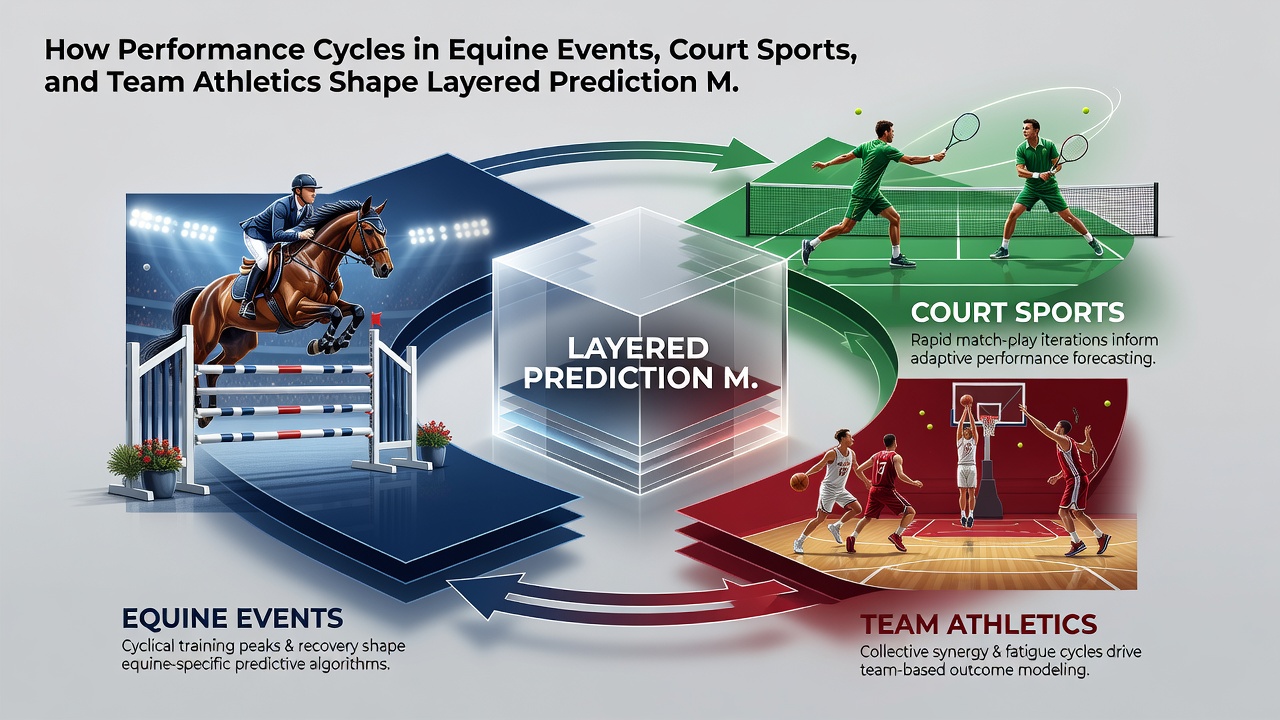
Team athletics including basketball and soccer display cycles spanning quarters, halves, and full campaigns, and metrics collected by organizations such as the National Collegiate Athletic Association demonstrate recurring scoring bursts that align with opponent fatigue patterns and travel schedules. In basketball, teams averaging fewer than 48 hours between games show a documented reduction in three-point accuracy during the final eight minutes of regulation, whereas soccer squads that rotate key midfielders maintain higher possession retention rates across consecutive fixtures. Layered prediction approaches combine these team-level rhythms with individual player recovery profiles to generate composite projections for upcoming fixtures.
Integration of Multi-Sport Cycle Data
Forecasters combine equine, court, and team data streams into unified frameworks because cross-sport correlations sometimes emerge around shared variables such as weather effects on recovery or fixture congestion. Reports from the Canadian Sport Institute Pacific indicate that August 2026 scheduling reviews identified overlapping patterns where equine events held on firm ground and tennis tournaments played in high humidity both produced elevated late-event variance, prompting analysts to adjust weighting factors in their models accordingly. These integrated layers allow for sequential refinement where initial baseline probabilities receive successive adjustments from sport-specific indicators.
August 2026 Developments and Model Refinements
During August 2026, several governing bodies released updated datasets covering the preceding 18 months, and analysts incorporated new equine recovery metrics alongside refined basketball load-management figures into existing layered systems. The adjustments produced measurable shifts in predicted outcomes for late-summer events, particularly where court sports overlapped with team athletics calendars. External validation from sources such as the Australian Institute of Sport confirmed that models using three-tier cycle integration achieved higher consistency across test periods compared with single-layer approaches.
Conclusion
Performance cycles in equine events, court sports, and team athletics supply distinct yet compatible inputs that analysts weave into layered prediction methods. Data from multiple international research bodies show that separating baseline rhythms from situational momentum layers yields more stable projections across varied competitive environments, and ongoing collection efforts through 2026 continue to refine these frameworks.