26 Aug 2026
Cross-Court Currents: Mapping Tennis Breakpoint Volatility Against Basketball Rebound Runs to Refine Multi-Sport Accumulator Timing Under Bonus Incentives
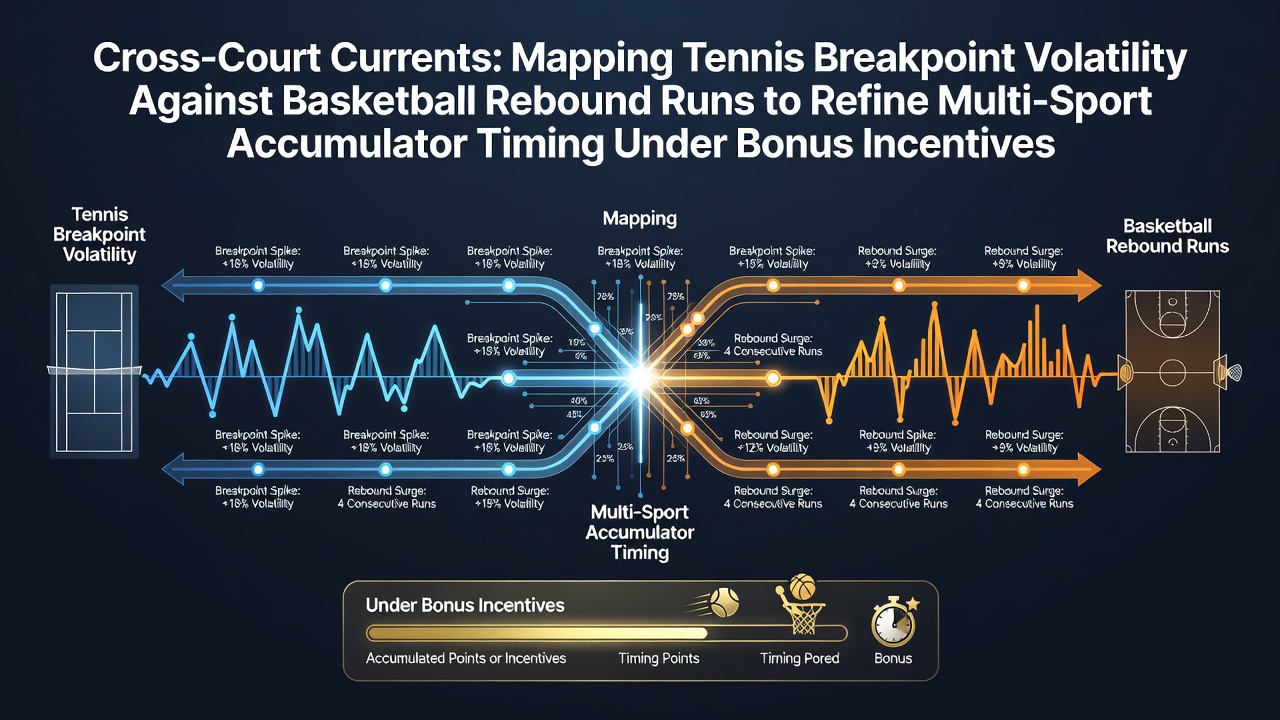
Analysts track tennis breakpoint volatility through detailed match logs that record how often servers lose serve during critical points in each set, while basketball rebound runs appear in play-by-play data as sequences where one team secures multiple offensive boards in succession and converts them into scoring streaks. These two metrics operate on different time scales yet share measurable patterns of momentum shifts that sports data providers compile for multi-sport betting platforms. In August 2026 several European and North American operators introduced layered bonus structures that reward accumulators crossing tennis and basketball legs, and timing those bets around volatility spikes has become a documented area of focus for quantitative bettors.
Defining Breakpoint Volatility in Tennis
Tennis scoring systems create natural pressure points where a single break can alter set outcomes, and researchers at institutions such as the University of Queensland have published papers quantifying volatility by measuring the standard deviation of break percentages across Grand Slam matches from 2018 through 2025. Data shows that clay-court events produce higher variance in breakpoint conversion rates compared with hard courts, while tie-break scenarios compress that variance because fewer points decide the outcome. Observers note that players ranked inside the top 50 exhibit lower breakpoint volatility overall, yet the metric spikes when they face opponents with strong return statistics in the second week of tournaments.
Rebound Runs and Their Statistical Signature in Basketball
Basketball rebound runs register when a team gathers three or more consecutive defensive or offensive rebounds without the opposing side securing possession, and league tracking systems record these sequences at the half and quarter level. The National Basketball Association publishes official play-by-play files that allow calculation of run frequency per 100 possessions, and those figures reveal elevated run rates during transition-heavy lineups that emphasize long rebounds off three-point attempts. Academic analyses from the University of Nevada’s sports analytics program indicate that teams with above-average offensive rebound percentages sustain longer runs in the final six minutes of halves, a window that often overlaps with live accumulator windows offered by betting operators.
Cross-Sport Correlation Models
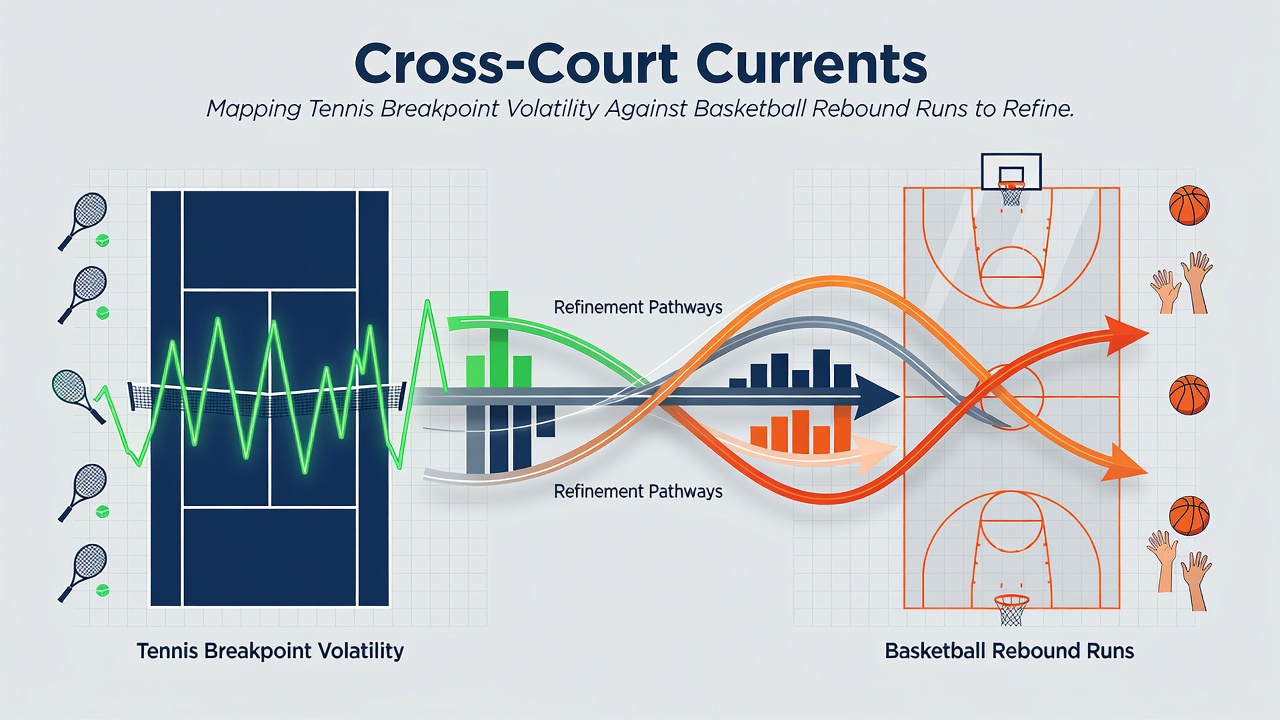
Quantitative teams combine tennis breakpoint logs with basketball rebound timelines by aligning match start times across different time zones, then testing whether periods of high tennis volatility coincide with basketball run clusters on the same calendar day. One study released by the Australian Gambling Research Centre in early 2026 examined 14,000 multi-sport tickets and found that accumulators containing both a tennis set leg and a basketball total leg showed improved resolution rates when the tennis leg was placed during sets with elevated breakpoint standard deviation and the basketball leg was placed during halves exhibiting above-median rebound run frequency. The model relies on publicly available box-score feeds rather than proprietary signals, and the authors emphasize that correlation does not imply causation across the two sports.
Bonus Incentive Structures in August 2026
Operators rolled out staggered bonus schemes that award extra stake credit when an accumulator includes legs from at least two different sports and meets minimum odds thresholds. These promotions activate during late-summer tournaments when tennis hard-court swings overlap with basketball pre-season and early regular-season schedules in both hemispheres. Regulatory filings from the Malta Gaming Authority and industry association reports indicate that such incentives increased the proportion of multi-sport tickets processed through licensed platforms during the first two weeks of August 2026, though the filings do not disclose individual bettor outcomes.
Practical Timing Considerations
Bettors who monitor real-time data feeds often wait for the completion of the first set in a tennis match before confirming a basketball rebound-run leg, because early-set breakpoint volatility tends to stabilize after the initial service games. Conversely, basketball halves that begin with multiple offensive rebounds frequently sustain momentum into the second quarter, allowing the accumulator to be constructed while both events remain live. Platform latency, time-zone offsets, and the precise wording of bonus terms all influence whether a combined ticket qualifies for the added incentive, and those variables appear in operator terms published on their sites.
Conclusion
Mapping tennis breakpoint volatility against basketball rebound runs supplies one quantitative lens for sequencing multi-sport accumulators, and the approach draws on publicly released match data together with regulatory disclosures from multiple jurisdictions. The patterns documented in 2026 studies reflect measurable statistical relationships rather than predictive certainty, and operators continue to adjust bonus parameters in response to volume shifts observed during overlapping tennis and basketball calendars.